


Table of Contents

Old wood windows might look like they’re out of a storybook–but when they leak water, you’re looking at costly water damage on the horizon. One of the first steps to take is inspecting old windows for moisture damage, especially if your New England home has wood window frames. Unfortunately, old vinyl windows aren’t immune to water leaks, either. No matter the material, if the window becomes damaged, you might find yourself saying, “My windows are leaking water!”
How Do I Know If the Leak Is Coming From My Window or My Roof?
Telling apart a window leaking water from a roof leak starts with where the stain appears and when the water shows up. Is the leak coming from my window or my roof comes down to location, timing, and a simple diagnostic test any homeowner can run.
Water travels along rafters before dripping. So, leak above a window may appear feet away from the actual source. Stains directly around the window frame usually point to the window. Meanwhile, stains on the ceiling further from the frame often point to a roof problem. Getting the diagnosis right prevents paying for the wrong fix.
How to Tell the Difference Between a Window Leak and a Roof Leak
- Trace the Stain: Stains tight around the window frame point to a window leak, while ceiling stains set back from the frame usually signal a leak above. Water traveling along a rafter can appear well below where it actually entered the home.
- Check Above First: Inspect shingles, flashing, and gutters directly above the affected window before assuming the window itself is at fault. A clogged gutter or damaged flashing above the opening is one of the most common roof-mimics-window leak scenarios.
- Run a Hose Test: Spray water on one section of the window at a time while a second person watches inside for moisture. If wetting the wall above produces no leak but wetting the window frame does, the window is the confirmed source.
- Watch the Timing: Window leaking water typically appears during the rain event itself, while roof leaks often show up hours later or after snow begins to melt. Timing is one of the fastest ways to narrow down the source before any inspection.
- Ice Dam Confusion: New England ice dams force water under shingles and through the roof deck near the eaves, often near windows and skylights. Leaks that appear weeks after a winter storm with no rain nearby almost always trace back to roof entry, not the window.
- Cost of the Wrong Call: Emergency roof leak repairs can cost nearly $1,800, and roof leak damage left unaddressed can reach up to $24,000. Misidentifying the source and repairing the wrong system wastes money and lets the real damage continue.
Window Leak vs. Roof Leak: Key Diagnostic Differences
Indicator | Window Leak | Roof Leak |
Stain location | Around frame, on sill | On ceiling, away from frame |
Timing | During active rain | Hours after rain or after snowmelt |
Hose test result | Frame produces moisture when wet | No reaction at frame; wall above produces leak |
Ice dam history | Unlikely source | Very common source near eaves |
Flashing condition | Check window flashing | Check roof flashing above window |
Gutter condition | Less relevant | Clogged gutters above window — common culprit |
Finding the Right Fix the First Time
Top Recommendation: A free leak diagnostic from a contractor who inspects both windows and roof. This can out the wrong fix before a single dollar is spent. Schedule your free estimate today with Coastal Windows & Exteriors!
Best After a Storm: Running the hose test and timing check for homeowners who notice a leak above window level following heavy rain, before calling any contractor.
Ideal When in Doubt: A professional inspection covering both systems for any North Shore or Merrimack Valley homeowner who has replaced window caulk but still sees recurring stains.
Not sure whether to call a window company or a roofer? Let one contractor who handles both give you a clear, honest answer. Coastal Windows & Exteriors is a woman-owned, family-run exterior remodeling company established in 2011, with branch locations in Beverly, MA and Bedford, NH. We hold a 4.8-star Google rating with 1,000+ verified reviews and rank as the #1 Woman-Owned Replacement Company in New England (Qualified Remodeler Top 500). We’ve completed 7,000+ installations across MA, NH, and ME.
Request a free window estimate from Coastal Windows & Exteriors.
Browse our complete window FAQ guide from Coastal Windows & Exteriors.
Explore the Coastal Windows & Exteriors Windows Exterior Remodeling Home Improvement Help Center.
Last Updated: May 2026
Sources:
- Emergency roof leak repair can cost nearly $1,800, and emergency repairs cost up to twice as much as standard repairs. This Old House Emergency Roof Leak Repair Guidance on emergency roof leak repair costs and what homeowners can expect to pay. (2025)
- Roof leak repairs from deferred damage can reach up to $24,000. Angi Ice Dam Removal Cost Homeowner guidance on ice dam removal costs and associated roof repair expenses. (2025)
- Leak barrier membranes are installed to prevent water from entering through the roof deck, particularly at the eaves where ice dams form. GAF Ice Dams: Cause and Preventative Measures GAF technical bulletin on roofing system components and ice dam prevention. (Accessed May 2026)
- Homeowners should inspect their roof at least twice a year in spring and fall, and consult a professional if the roof is more than 20 years old or has recurring issues. GAF Residential Roofing FAQs GAF’s official guidance on roof inspection frequency and when to consider replacement. (2025)
- The average cost of window replacement in the US is $21,922, with a 76% return on investment at resale. Remodeling Magazine (JLC Online) New England Cost vs. Value Report Regional cost and ROI data for window replacement in New England. (2026)
- Impact resistance and extreme weather protection is a priority for 61% of windows and doors professionals surveyed. Fixr Windows and Doors Report Fixr survey of windows and doors contractors and industry specialists on homeowner priorities and industry trends. (2026)
Why Are My Windows Leaking Water?
Windows are leaking water most commonly because of failed exterior caulk, improper flashing, a cracked insulated glass seal, or worn weatherstripping. Your window may have a failed barrier where the water is entering the frame.
Each cause of windows leaking water points to a different fix. Maintenance requirements matter to 78% of windows and doors industry professionals surveyed. Coastal Windows & Exteriors can help you determine why is my water leaking water inside. Many times, weatherstripping and caulk are the culprits.
The Most Common Reasons Windows Leak in New England Homes
- Caulk Failure: Cracked or pulled-away exterior caulk lets wind-driven rain inside. New England’s freeze-thaw cycle ages exterior caulk fast, making it one of the most common causes of windows leaking water inside.
- Flashing Problems: Improper or missing head flashing above the window is one of the most serious causes of water entry.
- Failed Glass Seals: Insulated glass units lose their seal integrity over time. This allows condensation to form between panes and water to enter at the perimeter. Weatherstripping Wear: Worn compression weatherstripping along the sash allows wind-driven rain to push past the frame during storms. Casement windows, the second most requested window type, are especially prone to hinge-related leaks at the top corner of the sash.
- Hardware Misalignment: Damaged or worn latches allow the sash to sit unevenly against the frame, creating a gap where wind and water enter. Impact resistance and extreme weather protection is a priority for 61% of windows and doors professionals, and proper hardware function is a key part of that protection.
- Repair vs. Replace: Window replacement averages $21,922 nationally with a 76% return on investment at resale. When the same window has leaked repeatedly after caulk or weatherstrip repairs, the insulated glass unit or the full window has likely reached end of useful life.
Fixing Window Water Leaks the Right Way
Top Recommendation: A free in-home inspection that pinpoints the actual failure point for a window leaking water inside. Schedule your free estimate today.
Best for Caulk and Weatherstrip Issues: A DIY re-caulk with silicone-rated exterior sealant and fresh compression weatherstripping. This is best for windows under 15 years old with no signs of flashing or seal failure.
Ideal for Persistent or Recurring Leaks: A full window replacement evaluation for any North Shore or Merrimack Valley home. Call us if the same window has leaked more than once after surface-level repairs.
Tired of patching the same leak every season? Let a specialist find the real source and give you a straight answer. Coastal Windows & Exteriors is a woman-owned, family-run exterior remodeling company established in 2011, with branch locations in Beverly, MA and Bedford, NH. We hold a 4.8-star Google rating with 1,000+ verified reviews and rank as the #1 Woman-Owned Replacement Company in New England (Qualified Remodeler Top 500). We’ve completed 7,000+ installations across MA, NH, and ME.
Request a free window estimate from Coastal Windows & Exteriors.
Browse our complete window FAQ guide from Coastal Windows & Exteriors.
Explore the Coastal Windows & Exteriors Windows Exterior Remodeling Home Improvement Help Center.
Last Updated: May 2026
Sources:
- The average cost of window replacement in the US is $21,922, with a 76% return on investment at resale. Remodeling Magazine (JLC Online) New England Cost vs. Value Report Regional cost and ROI data for window replacement in New England. (2026)
- Maintenance requirements matter to 78% of windows and doors industry specialists surveyed. Fixr Windows and Doors Report Fixr survey of windows and doors contractors and industry specialists on homeowner priorities and industry trends. (2026)
- Thermal performance including U-factor and R-value is a priority for 87% of windows and doors professionals. Fixr Windows and Doors Report Fixr survey of windows and doors contractors and industry specialists on homeowner priorities and industry trends. (2026)
- Impact resistance and extreme weather protection is a priority for 61% of windows and doors professionals surveyed. Fixr Windows and Doors Report Fixr survey of windows and doors contractors and industry specialists on homeowner priorities and industry trends. (2026)
- Casement windows are the second most requested window type, favored by 30% of industry specialists for their airtight seals and unobstructed views. Fixr Windows and Doors Report Fixr survey of windows and doors contractors and industry specialists on homeowner priorities and industry trends. (2026)
How to Tell If Your Windows Are Actually Leaking Water
First, let’s talk about how to be sure that your windows are leaking water. Sometimes it looks like your windows are leaking water, but the leak is coming from somewhere else — like your ceiling.
So, how can you be sure that you have a leaky window?
6 Signs Your Window — Not Your Roof — Is the Leak Source
- Water stains around window frame
- Peeling paint on the wall or interior frame
- Visible mold on or near window, such as the sill
- Damp or musty smell
- Warped or damaged window sealant
- Condensation between double-glazed panes
If you’re spotting two or more of these signs, your window is almost certainly the leak source. Keep reading to figure out where the leak is coming from.
What Other Home Issues Can Be Mistaken for a Leaking Window?
Before you blame your windows, it’s worth considering a few usual suspects around the house that love to masquerade as window leaks. Sometimes, what looks like a rogue draft or puddle is actually the handiwork of other home issues.
Some common culprits include:
- Missing or damaged shingles: If your roof has seen better days, water can sneak in through gaps and show up near your windows, making it seem like they’re the enemy.
- Cracks in walls or siding: Small cracks—especially around window frames or in exterior siding—can channel water inward.
- Clogged gutters and downspouts: When gutters overflow (thank you, autumn leaves), water can back up and seep along walls, often ending up near window sills.
- Faulty flashing: Improper or aging flashing around roofs or chimneys can redirect water to interior walls or windows.
It’s always wise to rule out these possibilities before diving headfirst into window repairs. Sometimes, a simple fix elsewhere can save you the hassle and expense of replacing a window that isn’t the real culprit. If you are unsure about where the leak is coming from, please contact us at Coastal Windows & Exteriors for a free assessment!
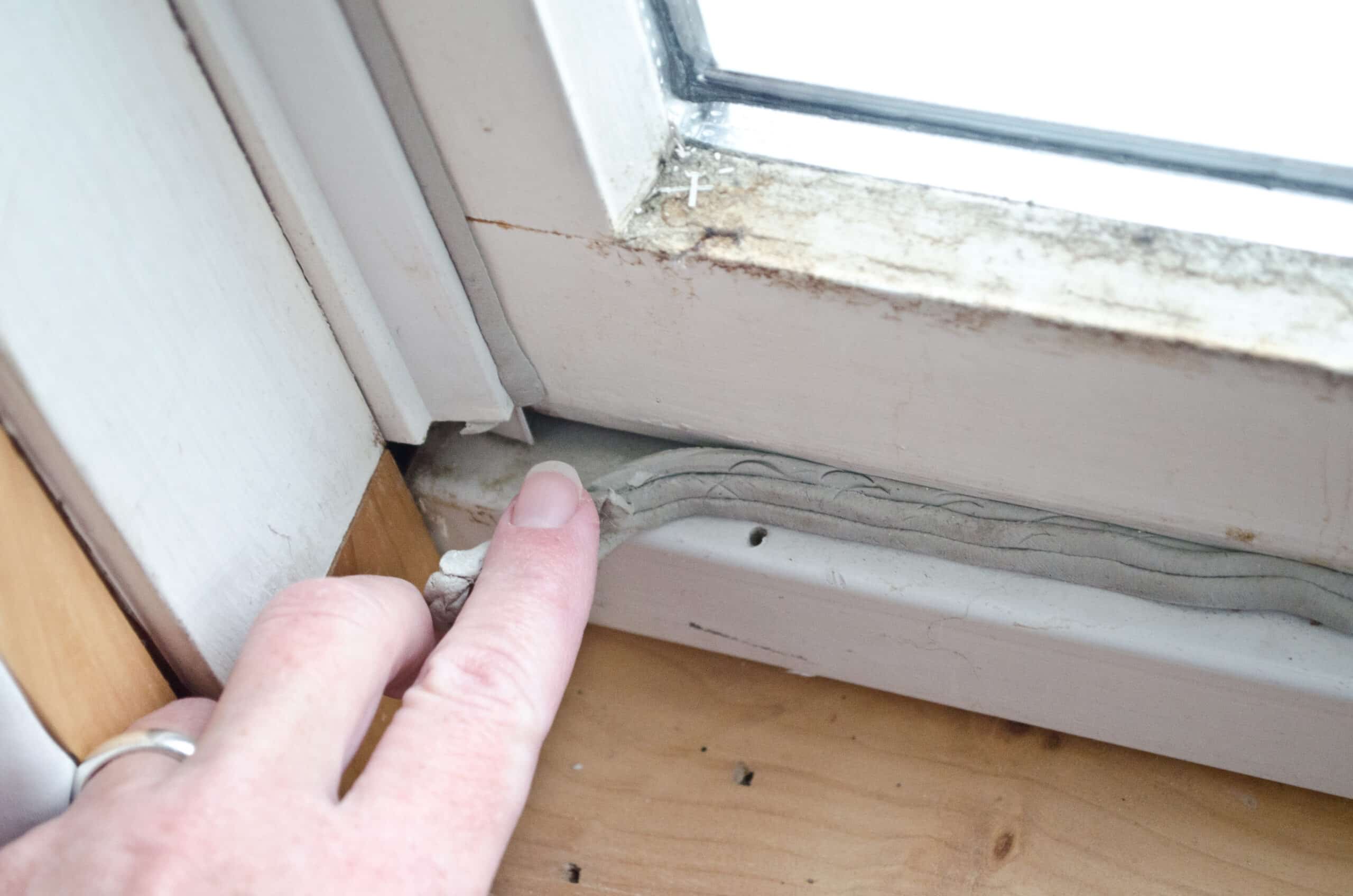
Why Do Windows Leak Water? 4 Most Common Causes
If your windows are leaking water, you might wonder why this problem is happening in the first place. Windows leak water for several reasons and they depend on where the leak is coming from.
The Water Is Coming from Around the Window (Sealant/Caulk Failure)
Depending on where the leak is located, the water can seep in from the top, sides, or bottom of the window. When you find water coming from around your window, consider the following:
- Leak Location and Cause: Water can seep in from the top, sides, or bottom of the window when the sealant or caulk becomes old and cracked.
- Signs of Degraded Sealant: Look for condensation around the edge of the window when it rains, or discoloration and abrasions on the caulk itself.
- Simple Fix: Replacing the old caulking with new caulk is a quick resolution.
- Important Consideration: If your windows are old and underperforming, caulk is considered a “band-aid resolution” and will likely fail again over time.
The Water is Leaking from the Top (Installation/Flashing Problem)
Top-of-the-window leaks can indicate installation mistakes. It could be that the flashing was improperly installed, or it may not exist at all. A poorly installed house wrap could also lead to leaking windows.
1) Root Causes: Installation Mistakes
- Leaks coming from the top of the window often point to improper installation during construction.
- Missing or incorrectly installed flashing is a common culprit—it’s meant to direct water away from the window opening.
- House wrap that is poorly applied or not sealed properly can allow moisture to seep in.
- Windows that are not correctly fitted to the opening may create small gaps where water can enter over time.
- Using non–corrosion-resistant nails can lead to deterioration and eventual leakage at weak points.
- These issues might not show up immediately but can cause top-of-window leaks long after installation is complete.
2) The Solution: Repair vs. Replacement
- Simply applying caulk or sealant to the top of the window will not solve this kind of leak.
- Effective fixes often require removing flashing tape and house wrap to inspect the underlying structure.
- Because house wrap serves as a moisture barrier, any compromise here means water can enter behind the siding.
- In most cases, repairing the leak is not enough if the root issue is poor installation.
- Replacement of the window—with proper flashing, sealing, and slope—is usually the most reliable and long-term solution.
- Choosing replacement over patch repairs ensures the moisture barrier is fully restored and future leaks are prevented.
Casement Window Leaking from the Top (Hinge & Hardware Failure)
Casement windows hinge outward like a door, which means the top hinge and crank hardware are uniquely exposed to wind-driven rain. For New England homeowners with aging casement units, this is the most common point of failure we see.
- Corroded top hinge or hinge screws letting the sash sag out of square, creating a gap where water enters along the top rail.
- Worn or stretched compression weatherstrip along the top rail that no longer forms a watertight seal when the window is closed.
- Failed sealant where the upper hinge bracket meets the frame — a small gap that becomes a reliable water entry point in heavy rain.
- Cracked or split sash corner joint at the top of the unit — common in older casements exposed to New England’s freeze-thaw cycles.
- Crank operator that no longer pulls the sash tight against the frame — even a small gap at the top is enough to let wind-driven rain in.
If your casement is leaking only from the top, the issue is almost never the glass — it’s hardware-related. Coastal Windows & Exteriors can pinpoint the exact failure point in minutes.
Bay & Bow Window Leaks: Why Their Geometry Makes Them Vulnerable
Unlike standard windows, bay and bow windows project outward from the exterior wall — giving them their own mini-roof and knee wall. Both of these components can fail independently of the window itself, making a leaking bay window one of the trickier diagnoses in New England homes.
- Failed roof flashing where the bay roof meets the home’s siding is one of the most common reasons a bay window leaks when it rains — water follows the seam directly into the wall.
- Gaps in the seat board (knee wall) seal allow water to wick upward from below, which is why bay window leaking from the bottom is often misdiagnosed as a sill problem.
- Failed caulk between individual window units — where the side windows meet the center picture window — creates an open channel for wind-driven rain to enter.
- Poor pitch on the bay roof allows water to pool rather than drain, accelerating ice damming in winter and increasing the risk of your bay window leaking from the top.
- Rotted support brackets or knee-wall framing from prior unaddressed leaks can compromise the entire window structure over time.
Because bay windows have so many independent failure points, repair quotes are often higher than a clean replacement. Contact Coastal Windows & Exteriors for a free estimate!
The Window Leaks from the Bottom (Weep Holes & Sill Pan)
When customers call us asking for help with leaky windows, the leak could also be coming from the bottom of the window.
Window Sill and Slope Problems
- Water leaks often occur between the sill pan and the window sill, especially near the bottom where the sill is supposed to slope downward and away from the house.
- Every window should have a properly sloped sill to direct water away from the structure. If the slope is missing, incorrect, or poorly constructed, or if the sill pan is not properly sealed, water may infiltrate — potentially requiring the window to be reinstalled.
Damaged Hardware: When a Faulty Latch Lets Water In
Damaged window hardware — like a faulty latch or handle — can absolutely contribute to leaks. When a window doesn’t close and seal tightly, rainwater can sneak through even the smallest gaps, finding its way inside your home.
The good news? Most hardware components are pretty affordable and simple to replace. By swapping out worn hinges, locks, or cranks, you can restore your window’s tight seal and keep unwanted moisture where it belongs: outside. However, be forewarned that replacing hardware won’t necessarily improve the energy efficiency of your windows.
Old Wood Windows: 7 Signs They’re Past Repair
Sometimes old windows — wood, especially — will leak water. The truth is that new caulking or weatherstripping is often a band-aid approach. Your old wood windows might be failing if:
- The wood frames are visibly rotting or warped.
- Paint on the window frames is peeling or blistering.
- You can feel drafts coming through the window edges.
- The operation of the window (opening/closing) is compromised.
- Condensation frequently forms inside the glass of double-paned windows.
- There’s a noticeable increase in your heating or cooling bills.
- The window sash or frame has become soft to the touch.
If you’re checking off four or more of these signs, no amount of caulk will stop persistent leaks — it’s time to talk replacement with Coastal Windows & Exteriors.
Where to Spot Water Damage on Windows
Your windows have a big job — they reduce your energy bills while keeping your home dry. But harsh weather conditions such as snow, ice, and rain can wear down your windows over time, both in terms of aesthetics and performance.
If you’re looking for water damage around windows, it will be more prevalent on wood windows. It is very easy for wood window frames to succumb to moisture damage, as well as mold and mildew growth, especially if they are not properly maintained.
Signs of damage can include peeling paint and rot in wood windows and frames. Water damage under windows is also common. Check your window in the following areas for discoloration, soft spots, or staining.:
- the sill
- the interior wall below the frame
- the floor trim
How to Detect Moisture Damage in Windows
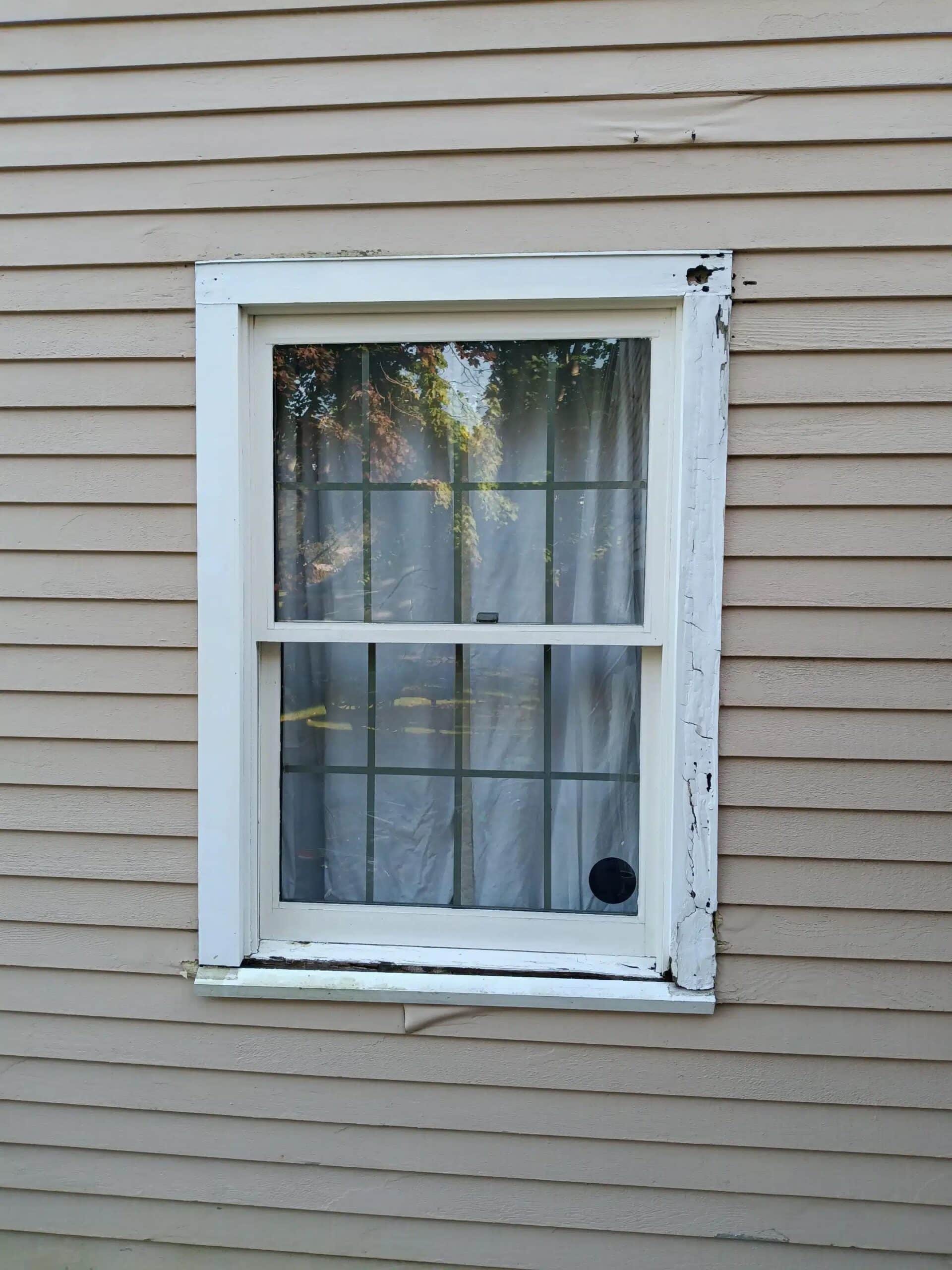
If you suspect that your windows are leaking water, you might be unsure about what to look for in terms of moisture damage. Water damage around windows can be obvious, but other times the signs are inconspicuous and go unnoticed.
These are the most common signs of moisture damage in windows:
- Check for discoloration around the windows and on the frames. You might find water spots and stains in the home that are brown, yellow, or copper in color.
- Cracks, bubbles, and peeling paint are all symptoms of potential window leaks.
- Changes in the texture of wood may also indicate window leaks. As an example, wood window frames may buck when they become detached from the siding. As well as sagging window frames, wood window frames may feel spongy from moisture damage.
- Mold and mildew can grow both inside and outside of walls under the right conditions.
- With severe moisture damage, you can poke a wood window frame with a screwdriver and it will sink right through the frame.
- The window has foggy glass that won’t wipe away.
- You feel a draft around your windows.
- You’re experiencing high energy bills.
Water damage is unlikely to occur with vinyl replacement windows. These windows also have weep holes that prevent water damage. Window weep holes drain water from your windows while preventing airflow into your home, and small flaps cover the holes to keep the wind from blowing through them. Additionally, the exterior holes are not aligned with the interior holes, which prevent direct airflow.
Pinpointing a Leak with a Garden Hose Test
Not sure how to find a leak in a window? A quick way to identify the exact source of a window leak is by performing a simple water test. This method helps you find where a window is leaking water from without guesswork.
- Perform a simple water test to locate window leaks.
- Ask a helper to assist you during the test.
- Use a garden hose to gently spray water along the window edges.
- Start spraying from the bottom and slowly move upward.
- Stay inside and watch for signs of moisture — like drips, water spots, or damp areas.
- Pinpoint the exact spot where water enters to determine what needs repair.
How to Stop Windows from Leaking Water
Leaks around windows are common but preventable when you know the common culprits. Most are traced back to one of three culprits: worn weatherstripping, cracked caulking, and clogged weep holes.
Knowing how to stop a window leak starts with identifying which of these is causing the problem. Once you determine that your windows are leaking water, it’s time to take action.
Inspect & Re-Caulk Cracks Around the Frame
Leaks around window frames are one of the most common — and most fixable — entry points for water. Water can seep inside cracks or holes in the window. Here is how to find them and patch them up:
- Regularly inspect window frames and sashes for cracks or damage.
- Seal any cracks or holes with caulk or sealant immediately.
- Check for gaps between the window frame and the house structure.
- Ensure weep holes are clear of debris to allow proper drainage. Window weep holes drain water from your windows while preventing airflow into your home, and small flaps cover the holes to keep the wind from blowing through them.
- For significant gaps, use expanding foam insulation for a tighter fit.
If you’re caulking the same spot every spring, you’re treating the symptom — not the cause.

Replace Failed Weatherstripping (Silicone Is Best)
One of the most effective ways to seal windows from rain is to keep your weatherstripping and caulking in good condition. When weatherstripping and caulking fails, it can lead to water leaks. Here is how to address those issues:
- Inspect weatherstripping for wear or damage.
- Replace worn or damaged weatherstripping promptly.
- Check caulking around window for cracks or gaps.
- Re-caulk areas where old caulking has failed.
- Ensure caulking is smooth and fully seals edges.
- Choose high-quality, weather-resistant caulking material. Silicone is best!
Learn more about weatherstripping windows for winter to protect your home through New England’s harshest months.
Clear Clogged Weep Holes
Clogged weep holes are a surprisingly common cause of window leaks — and one of the easiest fixes. Proper weep hole window drainage is essential for keeping water from backing up into your frame and sill.
- Windows with metal or vinyl frames typically have small drain holes — also known as weep holes — near the bottom edges. These are designed to let accumulated water escape to the outside.
- Over time, these holes can become clogged with dirt, debris, or insect nests, preventing proper drainage. Use a straightened wire coat hanger or similar tool to gently clear out any blockages and restore water flow.
When DIY Won’t Cut It: Repair vs. Replace
Not every leak warrants full window leak repair — but several signs indicate that patching is throwing money at the problem. If you’re wondering whether a window can be repaired or if you need replacement, these triggers point clearly toward replacement.
- Water damage extends beyond the frame into drywall or sub-floor — structural damage means the leak has been active far longer than you realized.
- The same leak returned after caulk or weatherstrip repair — recurring leaks signal a deeper installation or flashing failure.
- Foggy glass between panes indicates seal failure, which cannot be repaired — the entire insulated glass unit must be replaced.
- A rotted wood frame that gives way to a screwdriver has lost its structural integrity — no sealant will hold in compromised wood.
- The window is older than 15 years and showing multiple symptoms from the lists above — at that point, repair costs often exceed the value of keeping the unit.
At Coastal Windows & Exteriors, our installers are factory-trained on flashing and water management — not just window installation. Feel confident in choosing Coastal when your windows are leaking water!
What to do if Your Windows are Leaking Water: Call Coastal Windows & Exteriors
If your windows are leaking water, here’s what to do:
- Start by finding where the leak is coming from — top, bottom, sides, or frame.
- Check for obvious culprits first: failed caulk, worn weatherstripping, or clogged weep holes.
- If DIY fixes haven’t held, or the leak has returned, it’s time to call a professional.
- Water damage that has spread beyond the frame into walls or flooring needs immediate attention.
- Coastal Windows & Exteriors serves 730+ towns across MA, NH, and ME — our installers are factory-trained on flashing and water management.
Don’t wait on windows that are leaking water — the damage compounds quickly. Schedule a free estimate today, and ask about our financing options to make your replacement affordable.
Frequently Asked Questions About Windows Leaking Water
Why Is My Window Leaking Water When It Rains
A window that leaks in a downpour points to wind-driven water slipping through hidden gaps. Window leaks during heavy rain usually trace to aged caulk, poor flashing, blocked weep holes, or gutter overflow.
Truth is, it comes down to pressure and direction, not how much water falls. Impact resistance and extreme weather protection rank as priorities for 61% of windows and doors professionals. That makes sense, since wind-driven rain probes every weak point a window has. Light rain runs right off the glass and trim. When a nor’easter or coastal storm rolls in, water gets driven sideways into gaps you’d never see!
What New England Homeowners Need to Know About Rain-Only Window Leaks
- Wind-Driven Rain: Hard rain plus wind pushes water past caulk and weatherstripping that seal fine in calm conditions. New England nor’easters and coastal storms expose every aging seal, gap, and flashing failure.
- Caulk and Flashing: Aged exterior caulk and missing or poor head flashing are the two most common causes of these leaks. Routine rain drains straight down, while driven rain finds the gaps that calm weather hides.
- Weep Hole Backup: Vinyl windows include weep holes along the bottom channel, built to drain rainwater back outside. Clogged holes trap that water inside, pushing it into your home once drainage can’t keep up.
- Gutter Overflow: A clogged gutter above a window dumps water down the wall, faking a window leak. Maintenance matters to 78% of windows and doors professionals, so rule out the gutter before blaming the window.
- Weatherstripping Gaps: Worn weatherstripping on the sash loses its grip under wind pressure, even if it looks intact. Casement windows win favor with 30% of industry specialists for tight seals, while shifting hinges leave them exposed.
Finding the Right Fix for Your Home
Top Recommendation: A free in-home inspection that traces heavy-rain window leaks to the actual source — window, flashing, or roof — so no repair budget goes toward the wrong fix. Schedule your free estimate today.
Best First Step: Checking and clearing weep holes and inspecting the gutter directly above for any North Shore or Merrimack Valley homeowner whose window only leaks during storms.
Ideal for Recurring Leaks: A full window replacement evaluation for any home where caulk and weatherstrip repairs have been attempted but the window continues to leak during nor’easters or heavy rain events.
Still seeing water come in every time a storm rolls through? Let a specialist find the exact entry point before another repair misses the mark. Coastal Windows & Exteriors is a woman-owned, family-run exterior remodeling company established in 2011, with branch locations in Beverly, MA and Bedford, NH. We hold a 4.8-star Google rating with 1,000+ verified reviews and rank as the #1 Woman-Owned Replacement Company in New England (Qualified Remodeler Top 500). We’ve completed 7,000+ installations across MA, NH, and ME.
Request a free window estimate from Coastal Windows & Exteriors.
Browse our complete window FAQ guide from Coastal Windows & Exteriors.
Explore the Coastal Windows & Exteriors Windows Exterior Remodeling Home Improvement Help Center.
Last Updated: May 2026
Sources:
- Impact resistance and extreme weather protection is a priority for 61% of windows and doors professionals surveyed. Fixr Windows and Doors Report Fixr survey of windows and doors contractors and industry specialists on homeowner priorities and industry trends. (2026)
- Maintenance requirements matter to 78% of windows and doors industry specialists surveyed. Fixr Windows and Doors Report Fixr survey of windows and doors contractors and industry specialists on homeowner priorities and industry trends. (2026)
- Casement windows are the second most requested window type, favored by 30% of industry specialists for their airtight seals and unobstructed views. Fixr Windows and Doors Report Fixr survey of windows and doors contractors and industry specialists on homeowner priorities and industry trends. (2026)
- The average cost of window replacement in the US is $21,922, with a 76% return on investment at resale. Remodeling Magazine (JLC Online) New England Cost vs. Value Report Regional cost and ROI data for window replacement in New England. (2026)
- Warranty and after-sales service is cited as important or very important by 92% of windows and doors professionals. Fixr Windows and Doors Report Fixr survey of windows and doors contractors and industry specialists on homeowner priorities and industry trends. (2026)
Can a Leaking Window Be Repaired or Does It Need Replacement?
A leaking window can often be repaired when caulk fails, weatherstripping wears, or weep holes clog. Knowing how to fix a leaky window comes down to the frame, the glass seal, and repair history.
Catch a fixable leak early, and you can add several years of life without major cost! Maintenance requirements matter to 78% of windows and doors industry professionals, and water-leaking windows eventually need replacing. Fix leaky windows at the first sign of trouble, and the choice often stays simple!
How New England Homeowners Can Tell Repair from Replacement
Repair Makes Sense: Failed caulk, worn weatherstripping, and clogged weep holes are all fixable without a full replacement. Spot these problems early, and a well-installed window earns another five to ten years of service.
Replace When Persistent: Recurring leaks, fogged glass, rotted sub-sill or framing, and frames over 15 years old signal replacement. Patching a compromised window costs more over time than fixing it right once.
The Screwdriver Test: Press a screwdriver into the wood frame near the bottom corners and along the sill. When the wood gives way, the frame has rotted, and cosmetic condition no longer matters.
Thermal Performance Loss: A failed insulated glass seal doesn’t just let water in. It also lets heat and cooling escape. U-factor and thermal performance rank as a priority for 87% of windows and doors professionals. Surface repairs alone won’t fix a fogged unit that leaks energy.
Insurance Rarely Covers It: Homeowners insurance rarely pays for window leaks unless they trace to a covered event like storm damage. Out-of-pocket costs can climb once flashing or sub-sill work enters the picture.
Replacement ROI: Window replacement averages $21,922 nationwide, with a 76% return on investment at resale. Once repeated repair costs approach that figure, replacement becomes the smarter financial call.
Repair vs. Replace: A Quick Decision Guide
Condition | Recommended Action | Urgency |
Failed exterior caulk only | Repair — re-caulk with silicone sealant | Low to moderate |
Worn weatherstripping | Repair — replace compression or silicone strip | Moderate |
Blocked weep holes | Repair — clear with thin tool | Low |
Fogged glass between panes | Replace — glass unit or full window | Moderate to high |
Soft or rotted frame corners | Replace — structural failure present | High |
Leak returns after two repairs | Replace — underlying failure not resolved | High |
Frame over 15 years with recurring leak | Full assessment — likely replacement | High |
Making the Right Call for Your Home
Top Recommendation: A free in-home inspection that gives an honest repair-versus-replace recommendation before any money is spent, for any homeowner unsure whether how to fix a leaky window applies to their situation. Schedule your free estimate today.
Best for Early-Stage Leaks: Re-caulking and weatherstrip replacement for North Shore or Merrimack Valley homeowners whose windows are under 15 years old with no signs of frame rot or seal failure.
Ideal When Repairs Have Failed: A full window replacement evaluation for any home where the same window has leaked more than once after surface repairs, or where the screwdriver test reveals soft framing.
Not sure whether your window needs a quick fix or a full replacement? Get a straight answer from a specialist who will tell you the truth either way. Coastal Windows & Exteriors is a woman-owned, family-run exterior remodeling company established in 2011, with branch locations in Beverly, MA and Bedford, NH. We hold a 4.8-star Google rating with 1,000+ verified reviews and rank as the #1 Woman-Owned Replacement Company in New England (Qualified Remodeler Top 500). We’ve completed 7,000+ installations across MA, NH, and ME.
Request a free window estimate from Coastal Windows & Exteriors.
Browse our complete window FAQ guide from Coastal Windows & Exteriors.
Explore the Coastal Windows & Exteriors Windows Exterior Remodeling Home Improvement Help Center.
Last Updated: May 2026
Sources:
- Maintenance requirements matter to 78% of windows and doors industry specialists surveyed. Fixr Windows and Doors Report Fixr survey of windows and doors contractors and industry specialists on homeowner priorities and industry trends. (2026)
- Thermal performance including U-factor and R-value is a priority for 87% of windows and doors professionals. Fixr Windows and Doors Report Fixr survey of windows and doors contractors and industry specialists on homeowner priorities and industry trends. (2026)
- Impact resistance and extreme weather protection is a priority for 61% of windows and doors professionals surveyed. Fixr Windows and Doors Report Fixr survey of windows and doors contractors and industry specialists on homeowner priorities and industry trends. (2026)
- Warranty and after-sales service is cited as important or very important by 92% of windows and doors professionals. Fixr Windows and Doors Report Fixr survey of windows and doors contractors and industry specialists on homeowner priorities and industry trends. (2026)
- The average cost of window replacement in the US is $21,922, with a 76% return on investment at resale. Remodeling Magazine (JLC Online) New England Cost vs. Value Report Regional cost and ROI data for window replacement in New England. (2026)
What Type of Caulk Is Best for Sealing a Leaking Window?
High-quality silicone exterior caulk is the top choice for how to seal windows from rain in New England. It stays flexible through freeze-thaw cycles and resists cracking far longer than acrylic latex.
Choosing what kind of caulk to use on windows depends on material, climate, and old caulk removal. Maintenance matters to 78% of windows and doors professionals. Caulk is one of the most maintenance-sensitive parts of any window. Even the best new caulk applied over failed old material won’t bond and fails again fast.
What New England Homeowners Need to Know About Window Caulk
- Silicone wins: Silicone exterior caulk outlasts acrylic latex in freeze-thaw climates since it stays flexible rather than hardening. Use the right material to fix leaky windows, and the seal holds longer through harsh winters!
- Match conditions: Choose a caulk rated for exterior use, with mold resistance and a cold-weather range for NH and MA. Reading the tube before buying prevents using the wrong product in an exterior application.
- Strip old caulk: Fresh caulk applied over old, failed caulk won’t bond to the surface and fails again fast. Use a caulk scraper to clear all existing material before applying new sealant for a clean bond.
- Tool the bead: Smooth the fresh caulk bead with a damp finger or caulk tool within five minutes of application. A well-tooled bead seals tighter, looks cleaner, and performs better under wind-driven rain.
- Caulk doesn’t fix everything: Even a sealed window loses energy through aged glass and failed insulated seals that caulk can’t fix. Thermal performance including U-factor is a priority for 87% of windows and doors professionals.
Silicone vs. Acrylic Caulk for New England Windows
Type | Flexibility | Lifespan | Best For | Paintable |
100% Silicone | High — stays flexible in cold | Longest — resists freeze-thaw cracking | Exterior window sealing in MA and NH | Some formulas yes — check label |
Acrylic Latex | Low — hardens over time | Shorter — cracks in freeze-thaw cycles | Interior trim and lower-exposure areas | Yes |
Siliconized Acrylic | Medium | Moderate | General exterior use in milder climates | Yes |
The Right Next Step for Your Windows
Top Recommendation: A free in-home window assessment for any North Shore or Merrimack Valley homeowner whose windows need more than caulk to perform — combining a fresh seal with a full efficiency and value evaluation. Schedule your free estimate today.
Best Upgrade Path: Window replacement for any home where aging single-pane or failed insulated glass units are losing more than $500 per year in energy costs that re-caulking alone cannot recover.
Ideal for Long-Term Value: A full window replacement evaluation for homeowners who want to fix leaky windows permanently while capturing the 76% return on investment and improved comfort that new windows deliver.
Caulk can buy time, but it cannot replace performance. If your windows are aging, leaking repeatedly, or driving up energy costs, a free estimate is the clearest next step. Coastal Windows & Exteriors is a woman-owned, family-run exterior remodeling company established in 2011, with branch locations in Beverly, MA and Bedford, NH. We hold a 4.8-star Google rating with 1,000+ verified reviews and rank as the #1 Woman-Owned Replacement Company in New England (Qualified Remodeler Top 500). We’ve completed 7,000+ installations across MA, NH, and ME.
Request a free window estimate from Coastal Windows & Exteriors.
Browse our complete window FAQ guide from Coastal Windows & Exteriors.
Explore the Coastal Windows & Exteriors Windows Exterior Remodeling Home Improvement Help Center.
Last Updated: May 2026
Sources:
- Maintenance requirements matter to 78% of windows and doors industry specialists surveyed. Fixr Windows and Doors Report Fixr survey of windows and doors contractors and industry specialists on homeowner priorities and industry trends. (2026)
- Thermal performance including U-factor and R-value is a priority for 87% of windows and doors professionals. Fixr Windows and Doors Report Fixr survey of windows and doors contractors and industry specialists on homeowner priorities and industry trends. (2026)
- Upgrading from single to triple pane windows can save over $500 per year on energy bills. ENERGY STAR Triple Pane Window Energy Savings ENERGY STAR guidance on energy performance and savings from window upgrades. (Accessed May 2026)
- The average cost of window replacement in the US is $21,922, with a 76% return on investment at resale. Remodeling Magazine (JLC Online) New England Cost vs. Value Report Regional cost and ROI data for window replacement in New England. (2026)
- Impact resistance and extreme weather protection is a priority for 61% of windows and doors professionals surveyed. Fixr Windows and Doors Report Fixr survey of windows and doors contractors and industry specialists on homeowner priorities and industry trends. (2026)
Can a Leaking Window Cause Mold Inside Walls?
A leaking window can cause mold inside your walls within 24 to 48 hours of sustained moisture. When water damage around a window goes unaddressed, it creates the exact conditions mold needs to spread.
Insulation traps the water against drywall and framing, where it has no way to dry out. Mold then grows behind surfaces that still look fine from the outside. By the time visible signs appear, it usually sits deep inside the wall cavity. Water damage under a window ranks among the most missed sources of hidden trouble in New England homes.
What New England Homeowners Need to Know About Window Leaks and Mold
- Mold grows fast: A leaking window can grow mold inside wall cavities within 24 to 48 hours. Once trapped, that water sits against the wood with no airflow, fueling fast growth.
- Early warning signs: Musty smells, peeling paint, soft drywall, and dark sill spots all point to water damage around a window. Catch these early, because they often mean mold already sits behind the wall!
- Hidden structural damage: Mold can reach wall studs, sub-sill framing, sheathing, and insulation before any exterior sign shows. Sometimes opening the wall is the only way to learn how far water damage under a window traveled.
- Air quality impact: When mold spreads inside walls, it lowers indoor air quality and can trigger respiratory problems. Maintenance matters to 78% of windows and doors professionals, since deferred upkeep opens a path to hidden moisture.
- Remediation costs more: Repairing the failed window costs far less than cleaning up mold after the fact. Impact resistance and extreme weather protection rank high for 61% of professionals, because strong windows stop the chain.
- Replacement stops the source: Window replacement averages $21,922, returns 76% at resale, and removes the leak source for good! Patching a failed window cannot undo the moisture damage already sitting inside the wall.
Water Damage Around Windows: What Each Sign Points To
Warning Sign | Likely Meaning | Urgency |
Musty smell near window | Mold already present in wall cavity | High — professional inspection needed |
Peeling paint at frame | Moisture cycling through wall surface | Moderate to high |
Soft or spongy drywall | Water-saturated drywall behind surface | High — likely structural involvement |
Dark staining at sill | Sustained water entry at sub-sill level | High — possible rot and mold |
Visible mold on frame | Surface mold — deeper growth likely present | Very high — remediation required |
No visible signs yet | Moisture may still be present inside wall | Moderate — inspection recommended |
The Right Next Step for Your Home
Top Recommendation: A free in-home window assessment that checks for hidden moisture damage at every window and refers homeowners to remediation when evidence of water damage under a window is found. Schedule your free estimate today.
Best for Older Homes: A professional inspection for any North Shore or Merrimack Valley home where windows are more than 15 years old and musty odors or soft drywall have appeared near the frame.
Ideal When Mold Is Suspected: Window replacement paired with a professional moisture assessment for any home where visible mold or sustained water damage around the window has already been identified.
A window leak that looks minor on the surface can be hiding serious damage inside the wall. Let a specialist check before it becomes a much larger problem. Coastal Windows & Exteriors is a woman-owned, family-run exterior remodeling company established in 2011, with branch locations in Beverly, MA and Bedford, NH. We hold a 4.8-star Google rating with 1,000+ verified reviews and rank as the #1 Woman-Owned Replacement Company in New England (Qualified Remodeler Top 500). We’ve completed 7,000+ installations across MA, NH, and ME.
Request a free window estimate from Coastal Windows & Exteriors.
Browse our complete window FAQ guide from Coastal Windows & Exteriors.
Explore the Coastal Windows & Exteriors Windows Exterior Remodeling Home Improvement Help Center.
Last Updated: May 2026
Sources:
- Maintenance requirements matter to 78% of windows and doors industry specialists surveyed. Fixr Windows and Doors Report Fixr survey of windows and doors contractors and industry specialists on homeowner priorities and industry trends. (2026)
- Impact resistance and extreme weather protection is a priority for 61% of windows and doors professionals surveyed. Fixr Windows and Doors Report Fixr survey of windows and doors contractors and industry specialists on homeowner priorities and industry trends. (2026)
- Warranty and after-sales service is cited as important or very important by 92% of windows and doors professionals. Fixr Windows and Doors Report Fixr survey of windows and doors contractors and industry specialists on homeowner priorities and industry trends. (2026)
- The average cost of window replacement in the US is $21,922, with a 76% return on investment at resale. Remodeling Magazine (JLC Online) New England Cost vs. Value Report Regional cost and ROI data for window replacement in New England. (2026)
- Thermal performance including U-factor and R-value is a priority for 87% of windows and doors professionals. Fixr Windows and Doors Report Fixr survey of windows and doors contractors and industry specialists on homeowner priorities and industry trends. (2026)
How Do I Stop a Window From Leaking?
How to stop a window from leaking starts with finding the exact entry point before any fix. The right order matters: inspect, then caulk, weatherstripping, weep holes, and flashing. However, these fixes will not improve a window’s energy efficiency.
A new fix over an undiagnosed failure point is the top reason leaks return. Maintenance requirements matter to 78% of windows and doors professionals. Skip the diagnostic step, and a simple seal swap turns into a recurring problem. How to stop a window leak permanently comes down to confirming that source first, every time.
Steps New England Homeowners Can Take to Stop a Window Leak
- Inspect First: Spray the window’s exterior with a hose, one section at a time, while someone checks inside for moisture. This simple hose test pinpoints the entry point before you spend a dime!
- Re-Caulk the Exterior: Cut out every bit of failed exterior caulk, then apply fresh silicone sealant rated for outdoor use. Fresh caulk over old, cracked material won’t bond, so it fails fast.
- Replace Weatherstripping: Pull out worn weatherstripping along the sash, then add silicone or high-density foam rated for harsh weather. Once it loses compression, wind-driven rain slips past the frame even when your caulk holds.
- Clear the Weep Holes: Vinyl windows drain through small weep holes at the bottom of the frame channel. A bent paper clip or thin wire clears the clogs and restores drainage before rain backs up indoors.
- Address the Flashing: Old or improper head flashing often explains how to stop a window leak after surface fixes fail. Replacing it means removing siding around the window opening, so this is a job for pros.
- Know When to Replace: Impact resistance and extreme weather protection rank as priorities for 61% of windows and doors professionals. Windows that can’t take the region’s brutal weather keep leaking, even after repeated surface repairs. Replacement averages $21,922, returns 76% at resale, and removes the leak source for many years!
DIY vs. Professional: Matching the Fix to the Failure
Leak Cause | DIY Fix | Professional Fix | When to Call a Pro |
Failed exterior caulk | Re-caulk with silicone sealant | Full perimeter reseal | If caulk fails a second time |
Worn weatherstripping | Replace compression or foam strip | Frame realignment if warped | If sash sits unevenly |
Clogged weep holes | Clear with paper clip or wire | Channel repair if damaged | If drainage channel is cracked |
Head flashing failure | No DIY fix | Remove siding, replace flashing | Always professional |
Sub-sill rot | No DIY fix | Structural repair or replacement | Always professional |
The Right Path to a Permanent Fix
Top Recommendation: A free in-home window inspection that identifies the actual failure point and gives an honest recommendation on whether how to stop a window leak means a targeted repair or a full replacement. Schedule your free estimate today.
Best First Step: Running the hose test and re-caulking with silicone exterior sealant for any North Shore or Merrimack Valley homeowner whose window shows side-entry leaks on a unit under 15 years old.
Ideal for Persistent Leaks: A full window replacement evaluation for any home where surface repairs have been attempted more than once, or where flashing or sub-sill damage is suspected as the underlying cause.
Still dealing with a window that leaks no matter what you try? A free inspection gets you a clear answer and a real fix. Coastal Windows & Exteriors is a woman-owned, family-run exterior remodeling company established in 2011, with branch locations in Beverly, MA and Bedford, NH. We hold a 4.8-star Google rating with 1,000+ verified reviews and rank as the #1 Woman-Owned Replacement Company in New England (Qualified Remodeler Top 500). We’ve completed 7,000+ installations across MA, NH, and ME.
Request a free window estimate from Coastal Windows & Exteriors.
Browse our complete window FAQ guide from Coastal Windows & Exteriors.
Explore the Coastal Windows & Exteriors Windows Exterior Remodeling Home Improvement Help Center.
Last Updated: May 2026
Sources:
- Maintenance requirements matter to 78% of windows and doors industry specialists surveyed. Fixr Windows and Doors Report Fixr survey of windows and doors contractors and industry specialists on homeowner priorities and industry trends. (2026)
- Impact resistance and extreme weather protection is a priority for 61% of windows and doors professionals surveyed. Fixr Windows and Doors Report Fixr survey of windows and doors contractors and industry specialists on homeowner priorities and industry trends. (2026)
- Thermal performance including U-factor and R-value is a priority for 87% of windows and doors professionals. Fixr Windows and Doors Report Fixr survey of windows and doors contractors and industry specialists on homeowner priorities and industry trends. (2026)
- The average cost of window replacement in the US is $21,922, with a 76% return on investment at resale. Remodeling Magazine (JLC Online) New England Cost vs. Value Report Regional cost and ROI data for window replacement in New England. (2026)
- Upgrading from single to triple pane windows can save over $500 per year on energy bills. ENERGY STAR Triple Pane Window Energy Savings ENERGY STAR guidance on energy performance and savings from window upgrades. (Accessed May 2026)

